



At a Glance
DPPs can help the chemical industry to increase circularity, reduce waste, and improve efficiency
More than just a tool for verifying sustainable and responsible manufacturing in line with ESPR legislation and circularity initiatives – Digital Product Passports are a tool for enabling widespread business transformation.
DPP Impact
Digital Product Passports can store data relating to each product at a granular level, giving a holistic view of its whole lifecycle and environmental impact. The data DPPs contain can provide organisations with an immutable audit trail for compliance with upcoming legislation, as well as give valuable insight into an organisation’s supply chain operations.

Sustainable Sourcing
Supply Chain Traceability
Recycling and Disposal
DPPs are mandated for all chemical products made or sold within the EU by 2030.
The chemical industry is required to make significant changes.
DPPs enable organisations to satisfy the regulatory requirements that will be imposed by the ESPR, which mandates the implementation of DPPs by 2030. Around 12,000 chemical substances could potentially be impacted. For organisations that want to future-proof their operations and gain a first-mover advantage, it would be best to start considering a DPP solution now.
Digital Product Passports: What You Need to Know
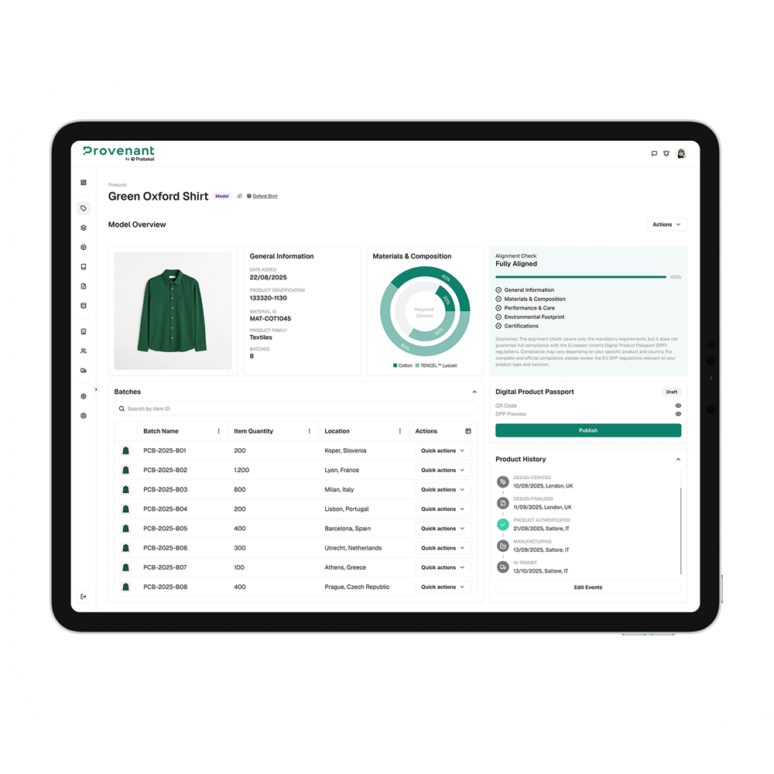
Provenant EU DPPs
Create, validate and manage EU Digital Product Passports at scale – on a specialist platform built for compliance readiness, product traceability and circularity.
- Build and deploy scalable DPPs across your product portfolio
- Align and validate your DPPs against regulatory criteria in real-time
- Enrich DPPs with post-purchase lifecycle events, sustainability metrics and more
- Integrate with existing systems to automate data collection and DPP creation
- Monitor the usage and performance of your DPPs through built-in analytics
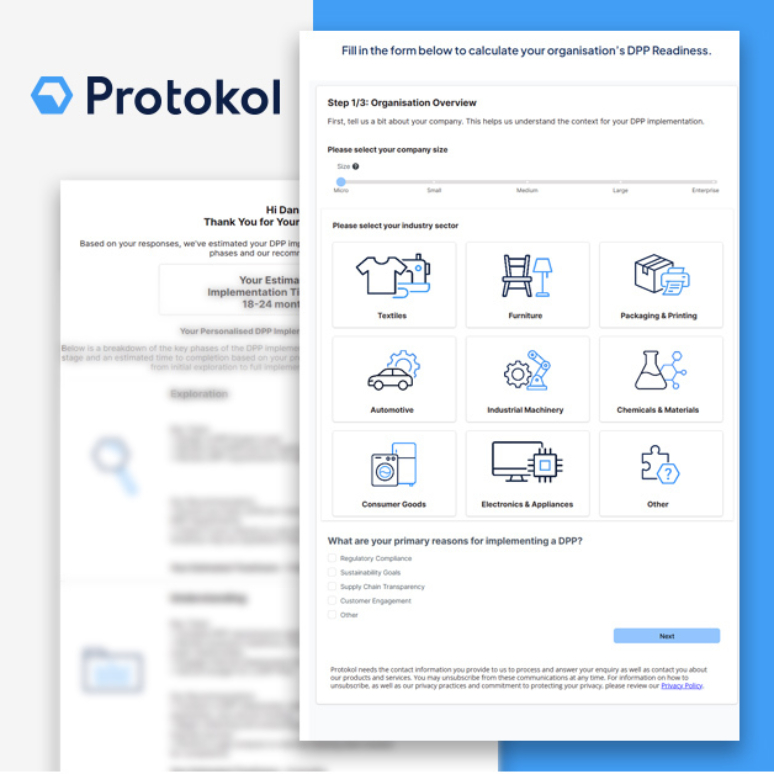
Digital Product Passport Readiness Calculator
Generate tailored timelines and recommendations for implementing DPPs within your business
Whether you’re just starting your DPP journey or are deep into planning, use our quick interactive calculator to analyse your business’s attributes and generate an estimated timeline, key tasks, and actionable recommendations for a successful DPP implementation.